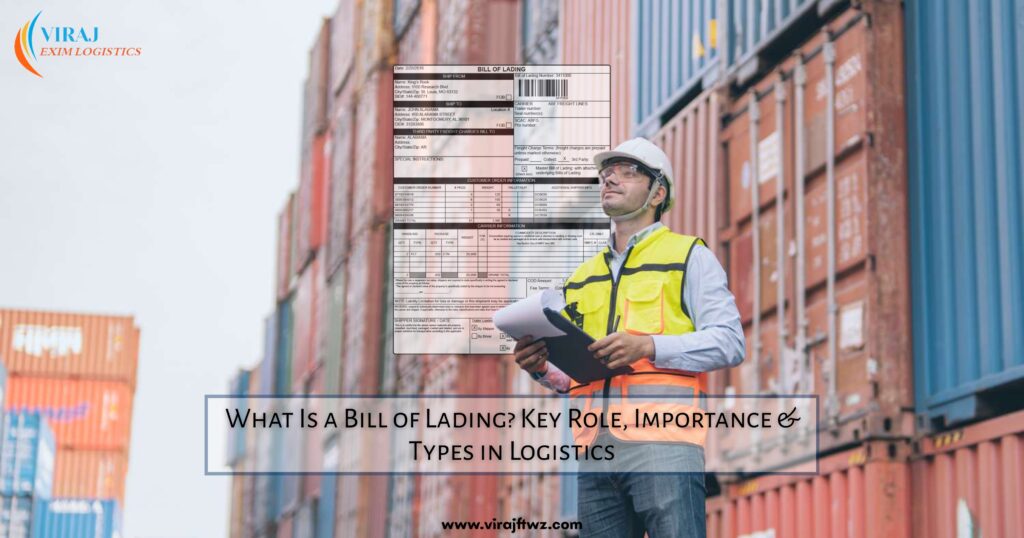
In the complex world of global trade, millions of goods move across countries every day—by sea, air, road, and rail. Behind every shipment lies a set of crucial documents that keep the process organized, legal, and traceable. Among these documents, the Bill of Lading stands out as one of the most important. If you own a business, manage logistics, or look into the supply chain, it’s important to understand the Bill of Lading.
This guide explains what a Bill of Lading is. It covers its purpose and importance in logistics. It also discusses who issues it and the different types used in international shipping.
What Is a Bill of Lading? (BL Meaning in Shipping)
A Bill of Lading (BL) is a legal shipping document. It is issued by a carrier, like a shipping line or freight forwarder, to a shipper. It serves as:
-
1. A receipt of goods
– BOL confirms that the carrier has received the cargo in good condition.
-
2. A contract of carriage
– It outlines the terms and conditions agreed upon between the shipper and the carrier.
-
3. A document of title
– It represents ownership of the goods and is required by the consignee to claim the shipment at the destination.
In simple terms, when someone asks, “What is Bill of Lading?”, the answer is this:
It is the main document that allows cargo to legally move from one place to another.
Why Is the Bill of Lading So Important in Logistics?
The Bill of Lading in logistics plays a central role in ensuring smooth movement of goods. Here’s why it is indispensable:
1. Legal Protection for All Parties
It protects the interests of the shipper, carrier, and consignee. It does this by clearly describing the shipment, quantity, packaging, and condition of the goods.
2. Enables Smooth Customs Clearance
Customs authorities in both the origin and destination countries need a Bill of Lading. This document helps them check cargo details before they release the shipment.
Read More: Best Customs Clearance Services at Nhava Sheva Port
3. Acts as Proof of Ownership
Since the BL acts as a title document, it is crucial for transferring ownership or clearing goods upon arrival.
4. Avoids Misunderstandings
It provides clarity regarding:
-
- Who will receive the goods
-
- What goods are being transported
-
- How and where they are being delivered
5. Supports Financial Transactions
Banks use the BOL during international trade payments, especially under Letters of Credit (LC).
Without a Bill of Lading, the shipment is seen as incomplete or undocumented. In most cases, it cannot move forward legally.
Who Issues a Bill of Lading?
A is typically issued by:
-
- Shipping lines (for sea freight)
-
- NVOCCs (Non-Vessel Operating Common Carriers)
The shipper submits the packing list, invoice, and cargo details. After the cargo is loaded, the carrier verifies the information and issues the BL.
What Information Does a Bill of Lading Contain?
While formats may vary, most Bills of Lading include:
-
- Shipper’s name and address
-
- Quantity, weight, and packaging type
-
- Container and seal numbers
-
- Port of loading and port of discharge
-
- Instructions for delivery
Accurate information is crucial; mistakes in the Bill of Lading can cause shipment delays, fines, and customs issues.
Real-World Bill of Lading Example
Imagine a company in India exporting machinery parts to a buyer in Germany. After packing and giving the cargo to the carrier at the port, the shipping line issues a Bill of Lading that includes:
-
- 50 pallets of spare parts
-
- Weight, dimensions, and container number
-
- Destination: Hamburg Port
-
- Freight terms: FOB or CIF (depending on contract)
This BL will be used by the buyer to claim the goods in Germany and by customs for verification.
Key Types of Bill of Lading
Understanding the types of Bill of Lading helps shippers choose the right document for their shipment needs. Here are the most common ones:
1. Ocean Bill of Lading
Used for sea freight, it is one of the most widely used BLs. It covers cargo shipped over international waters and acts as a contract, receipt, and title document.
2. Straight Bill of Lading
Issued to a specific consignee and not transferable.
Goods can only be delivered to the individual/company mentioned on the BL.
3. Order Bill of Lading (Negotiable BL)
A negotiable BL that allows the transfer of ownership through endorsement. This is commonly used in international trade and banking transactions.
4. Clean Bill of Lading
Issued when goods are received in good condition, with no damage or irregularities noted.
5. Claused (Foul) Bill of Lading
Issued when the cargo has visible damage or discrepancies. This can affect insurance claims and delivery acceptance.
6. Through Bill of Lading
Used when cargo moves across multiple transportation modes (e.g., sea + road). It covers the entire journey under a single document.
7. House Bill of Lading (HBL)
Issued by a freight forwarder to the shipper.
It is part of an arrangement where both a House BL and Master BL exist.
8. Master Bill of Lading (MBL)
Issued by the main carrier to the freight forwarder.
It contains overall shipment details and serves as a primary contract of carriage.
9. Electronic Bill of Lading (e-BL)
A digital version of the traditional BL, becoming popular due to faster processing, security, and reduced paperwork.
Common Challenges Related to Bills of Lading
1. Incorrect Cargo Details
Even small errors can delay customs clearance.
2. Lost or Delayed BL
Since a BL is a document of title, losing it can lead to serious shipment issues.
3. Fraud and Duplicate BLs
Electronic BLs help reduce this risk.
4. Misunderstanding BL Types
Choosing the wrong type may cause delivery restrictions or financial complications.
Being aware of these challenges helps businesses ensure smooth and secure shipments.
Why Understanding Bill of Lading Matters for Businesses
A smooth logistics process depends heavily on documentation. Knowing how a Bill of Lading works helps businesses:
-
- Protect financial interests
For companies involved in import/export, understanding the BL is not optional—it is essential.
Viraj Exim Logistics: Your Trusted Partner in International Shipping
When it comes to global trade, having a reliable logistics partner makes all the difference. Viraj Exim Logistics is a trusted name offering end-to-end logistics, warehousing, and freight management solutions.
Viraj Exim Logistics has a strong presence in FTWZ operations. They have deep knowledge in international shipping. This ensures smooth, efficient, and compliant cargo handling.
Their services include:
-
- Customs-compliant warehousing
-
- Support for importers, exporters, and global brands
If you are new to global logistics or entering new markets, Viraj Exim Logistics offers reliable support. Our help is based on experience and industry knowledge.
Reference:
Bill of lading by Wikipedia[1].
Carriage of Goods by Sea Act 1992 by Wikipedia[2].