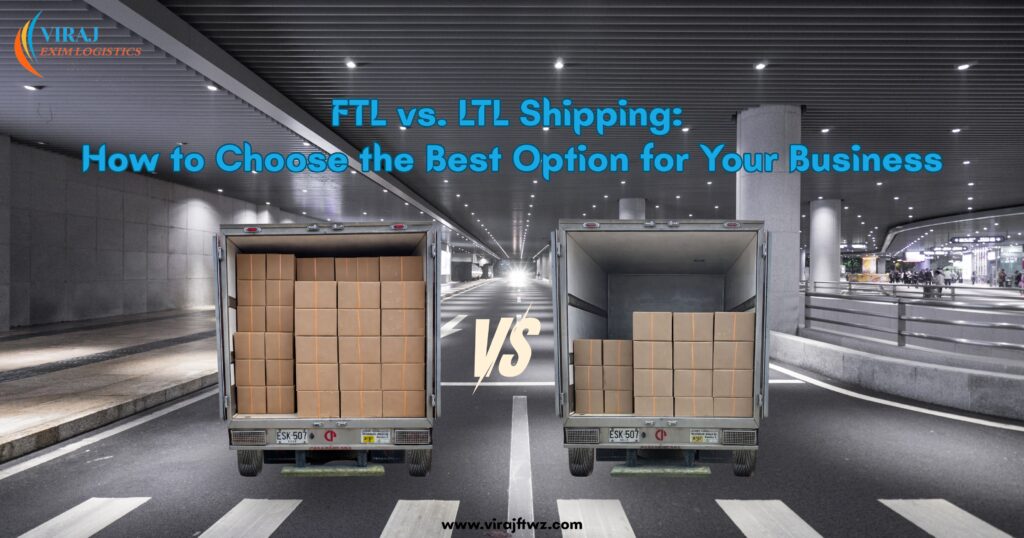
In today’s fast-paced business world, efficient shipping is essential. It can greatly impact your supply chain. It’s important to understand the difference between FTL and LTL shipping.
- FTL stands for Full Truckload.
- LTL means Less-than-Truckload.
This knowledge is useful for both small businesses that ship occasionally and large companies with regular deliveries. Making the right choice can save time, reduce costs, and improve overall customer satisfaction.
This guide will explain the main differences, benefits, and things to think about. It will help you choose the best shipping method for your business.
Understanding FTL and LTL Shipping
Before diving into comparisons, it’s important to understand what FTL and LTL shipping actually mean.
FTL (Full Truckload) Shipping involves shipping goods that fill an entire truck. Typically, businesses choose FTL when they have a large volume of products, want faster transit times, or need minimal handling of their freight. Since the truck is only for your shipment, the risk of damage is lower. Delivery schedules are also more predictable.
On the other hand, LTL (Less-than-Truckload) Shipping is designed for smaller shipments that don’t require a full truck. Multiple businesses combine their goods into a single truck, allowing them to share shipping costs.
LTL can save money for smaller shipments. However, it often requires more handling and stops. This can make delivery times a bit longer.
Read more: Understanding 8 Key Factors Shaping Freight Costs
Key Differences Between FTL and LTL
Understanding the distinctions between FTL and LTL shipping is crucial for making an informed choice. Here are the main differences:
1. Shipment Size and Volume
- FTL: Best for large shipments that can occupy an entire truck. Usually ideal for businesses with high-volume orders.
- LTL: Suitable for smaller shipments that don’t require a full truck, typically under 15,000 pounds.
2. Cost Structure
- FTL: Pricing is generally fixed per truck, regardless of whether the truck is fully loaded. This can be cost-effective for large shipments but expensive for smaller loads.
- LTL: Costs are calculated based on weight, dimensions, and distance, making it more affordable for smaller shipments.
3. Transit Time
- FTL: Faster transit since the truck goes directly from the pickup to the delivery location.
- LTL: Slower due to multiple stops and transfers between terminals.
4. Handling and Risk of Damage
- FTL: Minimal handling reduces the risk of damage. Your freight stays on the same truck from start to finish.
- LTL: More handling is involved as shipments are consolidated and deconsolidated at terminals, slightly increasing the risk of damage.
5. Flexibility
- FTL: Less flexible for small or urgent shipments since you need a full truckload.
- LTL: More flexible for businesses shipping small quantities or multiple destinations.
Factors to Consider When Choosing Between FTL and LTL
Choosing the right shipping option is not just about size and cost. It is also about how it fits your business and logistics planning. Consider the following:
1. Shipment Size and Frequency
If your business regularly ships large volumes of goods, FTL shipping might be the most efficient option. Conversely, if you ship smaller orders intermittently, LTL shipping is likely more cost-effective.
2. Budget Constraints
Smaller businesses often choose LTL to save on shipping costs. Larger companies with regular high-volume shipments may find FTL cheaper over time.
3. Delivery Speed Requirements
For time-sensitive shipments, FTL generally offers faster transit. LTL may take longer due to multiple stops, so it’s better suited for shipments where timing is less critical.
4. Product Type and Handling Needs
Fragile or high-value items benefit from FTL shipping, which minimizes handling and reduces the risk of damage. LTL can be suitable for robust items that can withstand multiple transfers.
5. Geographic Reach
LTL networks often cover a wide range of destinations with flexible delivery options. FTL offers a more direct option but may limit routes to those that justify a full truckload.
Pros and Cons of FTL and LTL Shipping
FTL Shipping Pros:
- Faster transit times
- Lower risk of damage due to minimal handling
- Easier tracking with direct shipments
- Ideal for high-volume or urgent shipments
FTL Shipping Cons:
- Higher cost for smaller shipments
- Less flexible for varying order sizes
LTL Shipping Pros:
- Cost-effective for smaller shipments
- Flexible for businesses with variable shipping needs
- Environmentally friendly since space is shared on trucks
LTL Shipping Cons:
- Longer delivery times
- Higher risk of damage due to multiple handlings
- Complex logistics for scheduling and tracking
Making the Right Choice for Your Business
Choosing between FTL and LTL shipping depends on a careful analysis of your shipping needs, budget, and delivery expectations. A few practical tips:
- Evaluate shipment volume and weight – Large, consistent shipments favor FTL, smaller, irregular shipments favor LTL.
- Consider delivery deadlines – Urgent or time-sensitive shipments often require FTL.
- Assess product fragility – Fragile or high-value items may benefit from FTL.
- Review your logistics strategy – Factor in overall supply chain efficiency and transportation costs.
By considering these factors, businesses can optimize their shipping strategy, improve customer satisfaction, and reduce overall logistics costs.
Why Partner with a Reliable Logistics Provider
Working with a reputable logistics partner can make the FTL vs. LTL decision much easier. Providers manage freight, optimize routes, and ensure that your goods arrive on time and intact. Good logistics planning is important for both types of shipping. It can make things more efficient, lower costs, and simplify operations.
One trusted provider is Viraj Exim Logistics. Our company is known for its skills in domestic and international shipping.
We provide custom solutions for businesses of all sizes. We ensure that your shipments, whether FTL or LTL, receive careful handling and timely delivery. Viraj Exim Logistics focuses on customer satisfaction and reliability. We help businesses improve their supply chain and offer competitive rates.
Conclusion
Choosing between FTL and LTL shipping doesn’t have to be complicated. By knowing the differences, looking at the pros and cons, and analyzing your business needs, you can make a smart choice. This choice will save time, cut costs, and ensure safe delivery of your goods.
– Remember, you can choose between full truckload or less-than-truckload shipping.
– Working with a reliable logistics provider, can help you be more efficient.
– It can also give you peace of mind. Good logistics planning and knowing your shipping options will keep your business ahead in today’s competitive market.
Reference:
Truckload shipping by Wikipedia[1].
Less-than-truckload shipping by Wikipedia[2]