
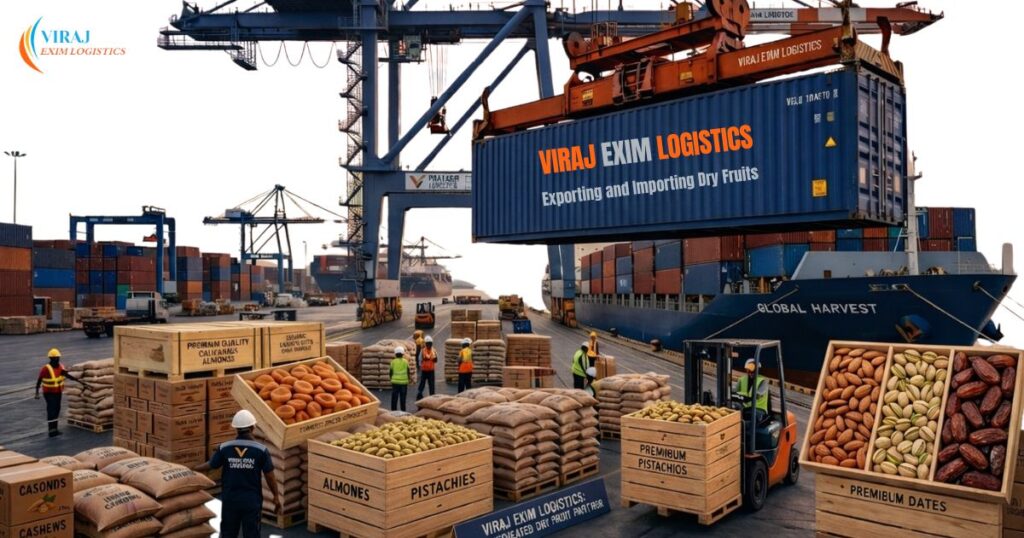
The global demand for dry fruits has increased steadily over the years. As more consumers focus on healthy eating habits, products like almonds, dates, and pistachios have become popular in households, bakeries, hotels, and food industries worldwide. This growing demand has created strong opportunities for businesses involved in dry fruit export and import.
However, international trade is not just about buying and selling products across borders. It involves proper documentation, strict food safety regulations, reliable transportation, and strong global logistics planning. Without the right strategy, businesses may face shipment delays, product damage, or financial losses.
This guide explains the complete process clearly and practically, helping you understand how to manage dry fruit export and import smoothly.
One of the decisions when exporting dry fruits is choosing a good logistics partner. Dry fruits can get damaged easily, so they need to be handled with care during transportation.
A good logistics partner should have:
For instance, if you are shipping large amounts of dry fruits, sea shipping might be the way to go because it’s cheaper. If you need to get dry fruits delivered, air shipping quickly might be better. Having the right partner helps reduce problems and ensures your dry fruits arrive on time to buyers in various countries. The right logistics partner is key to getting fruits to international buyers on time. Dry fruits are a product, so they require careful handling.
Choosing a logistics partner that knows about fruits can make a big difference. They should have experience with food products, like fruits. The logistics partner should also be able to track shipments so you can see where your dry fruits are.
Packaging plays a critical role in protecting dry fruits during export and import. Even high-quality almonds or pistachios can lose value if exposed to moisture or improper storage.
Best practices include:
Premium dry fruit box packaging is also gaining popularity, especially in gifting markets. Attractive and sturdy packaging not only protects the product but also helps businesses compete among the best dry fruit brands in India.
Careful handling during loading and unloading further prevents breakage and ensures product freshness upon arrival.
While the dry fruits trade offers excellent opportunities, it also comes with challenges.
Different countries have strict food safety and labeling standards. Missing or incorrect documentation can delay shipments or result in penalties.
Global prices of dates, almonds, and pistachios often change due to seasonal production, crop conditions, and international demand.
Port congestion, weather issues, or supply chain disruptions can affect delivery timelines.
Exchange rate fluctuations can influence profit margins in international trade.
Understanding these challenges helps businesses prepare better strategies and avoid unexpected losses.
When we talk about dry fruit export and import, we need to remember that good logistics is very important. Here are some simple tips to make trade easier:
We need to make sure all our papers, like invoices and certificates, are complete and correct.
Shipping by air is fast, but it costs more, and shipping by sea is better for big shipments because it is cheaper.
We need to check the products carefully before we send them out to make sure they meet the standards of other countries.
We should keep fruits in a dry and cool place so they stay fresh for a long time.
Using systems that track our shipments in time helps us know where our products are and when they will arrive.
Having insurance for our cargo protects us from problems or losses when our products are being transported.
By following these tips, businesses can make sure their dry fruits export and import operations are smooth and reliable. This will help with the dry fruits export and import.
Exporting and importing dry fruits presents strong business opportunities in today’s global market. With rising demand for almonds, dates, pistachios, and premium dry fruit box packaging, the sector continues to expand rapidly.
However, success depends on more than just product quality. Proper packaging, regulatory compliance, cost-effective shipping, and well-planned global logistics are essential for smooth international trade.
By understanding the process clearly and implementing best practices, businesses can reduce risks, maintain product freshness, and build long-term success in the global dry fruits industry. Efficient logistics is not just a support function—it is the foundation of sustainable growth in dry fruits export and import.
A-213 , Kasturi plaza , Manpada Road , Ramnagar , Dombivli (E) pin 421201 , Dist. Thane, Maharashtra, India
Copyright © 2024 Viraj Exim Logistics. Develop by Technofet