
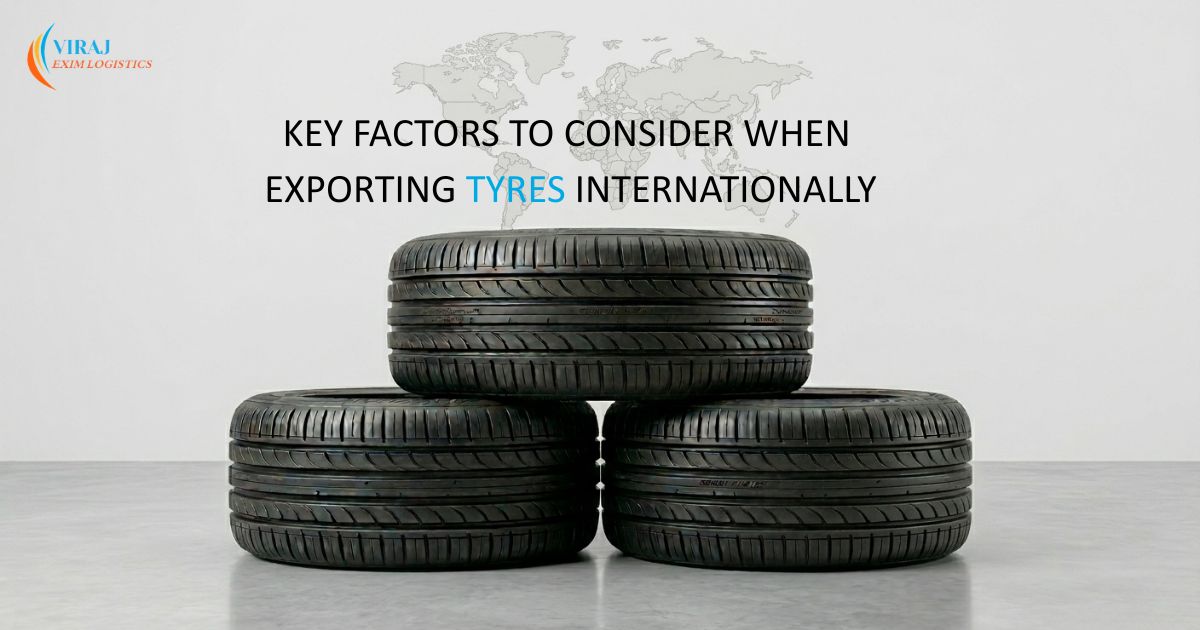
Understanding different tyre categories is essential for targeting the right international markets:
Car tyres are widely used in sedans, hatchbacks, and SUVs. These tyres offer:
High global demand makes PCR tyres one of the best export categories.
Neumatic tyres are air-filled tyres used in:
They provide:
These dominate the international tyre market.
Mining tyres are designed for:
They offer:
Though niche, they are high-value export products.
When you are exporting tyres to countries, there are some key things you need to think about.
Exporting tyres internationally is a deal, and you have to consider a few things:
Exporting tyres requires strict compliance with global safety, durability, and environmental standards. International buyers expect high-quality products that meet both performance and regulatory requirements.
Key Certifications
Tyres must follow recognised standards such as ISO 9001:2015 for quality management and ISO 14001 for environmental practices. Compliance with REACH (Europe) ensures restricted use of harmful chemicals, while ASTM standards define raw material quality. Regional certifications like DOT (USA), E-Mark (Europe), and BIS (India) confirm safety and performance.
Technical Requirements
Tyres should meet essential performance benchmarks, including strong tensile strength (around 20 MPa) for durability, optimised rolling resistance and wet grip for efficiency and safety, and solid structural integrity. Regular batch testing ensures consistent quality across production.
Inspection & Documentation
Before export, tyres undergo strict inspections for weight, dimensions, appearance, and performance. Third-party quality checks are often conducted, along with proper documentation of materials and manufacturing standards.
Export Flexibility
Tyres export can be exempt from domestic BIS rules, provided they fully meet the standards of the importing country.
You have to figure out how to charge for the tyres so that you can sell them for a good price and still make money. There are a lot of things that can affect the price, like how much the materials cost, how much it costs to get the tyres from one place to another, and what the exchange rate is. Exporting tyres internationally requires a pricing strategy.
You have to make sure the tyres are packed properly so they do not get damaged when they are being shipped. The labels on the tyres have to have all the information, like what the tyre is, where it was made, and that it meets all the rules in the country it is being sent to. This is important for exporting tyres
You need to know what kind of tyres people want to buy in those places. For example, people in cities might want tyres for their cars, and companies that do mining might want tyres for their big machines. Exporting tyres internationally means you have to understand the market demand for tyres.
When exporting tyres, international buyers don’t just look at the price. They carefully check technical specifications and certifications to make sure the tyres are safe, legal, and long-lasting in their country. Missing even one important detail can cause the deal to fail or the shipment to be rejected at customs.
Here are the most important things buyers always verify:
Size and Dimensions
The exact size of the tyre (width, aspect ratio, rim diameter) must fit the vehicle perfectly and match local market rules. Even a small mistake in size can create serious safety risks and performance problems. Buyers always cross-check the size marking on the sidewall.
Load Capacity and Speed Rating
Buyers always check the Load Index (how much weight the tyre can safely carry) and Speed Rating (maximum safe speed). These are clearly marked on the sidewall. They want full confidence that the tyre will not fail under heavy loads or high speeds on their roads.
Tread Design and Durability
The tread pattern decides how well the tyre grips the road in wet, dry, or off-road conditions. Buyers also check tread depth and durability to ensure the tyre will last longer and give better value for money.
Material Quality and Performance
High-quality rubber compounds and strong construction help the tyre handle heat, rough roads, and heavy use. Buyers look for tyres that resist wear, cracking, and blowouts in different weather and road conditions.
Manufacturing Date (Very Important!)
Every tyre has a DOT code on the sidewall. The last four digits show the exact week and year it was made (for example, “3524” means made in week 35 of 2024). Most buyers reject tyres that are more than 3–5 years old because rubber can harden and lose strength over time.
Certifications and Regulatory Marks
DOT Certification (mandatory for USA): The tyre must have the “DOT” symbol + full code on the sidewall. It proves the tyre meets US safety standards.
ECE / E-mark (very common for Europe and 50+ countries): Shows the tyre passed European safety tests (like ECE R30/R54).
EU Tyre Label (mandatory in Europe): Shows fuel efficiency, wet grip, and rolling noise level.
Manufacturing Date (from DOT code): Buyers always check the last 4 digits of the DOT code (e.g., 3524 = 35th week of 2024). Tyres older than 3–5 years are often rejected, even if brand new.
UTQG Rating (USA): Treadwear, Traction, and Temperature grades.
Other country marks: BIS (India), SNI (Indonesia), SASO/GSO (Middle East), etc.
Full sidewall markings: Size, load index, speed rating, max pressure, ply info, etc. (already partly in your content).
Compliance with standards is crucial when exporting tyres. Different countries have their own rules and need specific certifications, such as:
ISO Certification – Quality management
DOT Certification – Required for the U.S.
ECE Certification – Required for Europe
If you do not meet these requirements, you might have problems with your shipment or face legal issues. As an exporter, it is vital to stay informed about the regulations in the countries to which you want to export.
Tyre export can be a profitable business, but it also comes with several risks. If not managed properly, these risks can lead to delayed shipments, financial losses, rejected goods, or even legal problems. The good news is that most risks can be reduced with proper planning and the right partners.
Here are the key risk factors and simple ways to handle them:
Finding the right tyre supplier or manufacturer is one of the most important decisions in the tyre export business. A good supplier gives you consistent quality, on-time delivery, and the right certifications. A wrong choice can lead to rejected shipments, customer complaints, financial loss, and damage to your reputation.
Here are the key factors you should carefully check before partnering with any supplier:
Make sure the manufacturer holds the certifications your target markets require.
Choose a supplier that offers the sizes, tread patterns, load indices, and speed ratings that are in demand in your target countries. A wide range helps you serve more customers and grow faster. Check that they can consistently meet the exact technical specifications international buyers look for.
Can the factory handle your order volume without delays? Ask about their monthly production capacity and past delivery records. A reliable supplier should have good on-time delivery rates and the ability to manage peak seasons.
Prefer suppliers who already export tyres to international markets. They understand export packaging, container loading, required documents, and international shipping rules. This reduces logistics problems and customs issues.
Compare prices, but don’t choose only on the cheapest rate. Look at the overall value — good quality, consistent supply, and fair payment terms (such as Letter of Credit support). Cheap tyres that fail quality checks can cost you much more in the long run.
Ask how they inspect tyres before dispatch. A good manufacturer does regular testing for strength, durability, tread wear, and defects. Request pre-shipment inspection reports and consider visiting the factory or hiring a third-party inspector.
Check the supplier’s track record through references or past buyers. A trustworthy manufacturer stands behind its products with clear warranty policies and quick support if any issue arises.
Exporting tyres internationally offers significant business opportunities, but it requires careful planning and execution. From understanding market demand to ensuring compliance and managing logistics, every step plays a crucial role.
By focusing on quality, certifications, and market demand, exporters can build a strong presence in the international tyre market and expand their global business successfully.
1. What are the key factors to consider when exporting tyres internationally?
The key factors include quality standards, pricing, compliance with regulations, logistics planning, packaging, and understanding global market demand.
2. Which types of tyres are most in demand for export?
Car tyres have a high global demand, while mining tyres and commercial tyres are popular in the industrial and construction sectors.
3. What certifications are required for exporting tyres?
Common certifications include ISO standards, DOT (for the U.S.), and ECE certification (for Europe), depending on the target market.
4. How can I find international buyers for tyre export?
You can find buyers through B2B platforms, trade fairs, export directories, and by building a strong digital presence and networking.
5. What are the common challenges in tyre export?
Challenges include logistics delays, compliance issues, fluctuating costs, and payment risks in international transactions.
A-213 , Kasturi plaza , Manpada Road , Ramnagar , Dombivli (E) pin 421201 , Dist. Thane, Maharashtra, India
Copyright © 2024 Viraj Exim Logistics. Develop by Technofet