
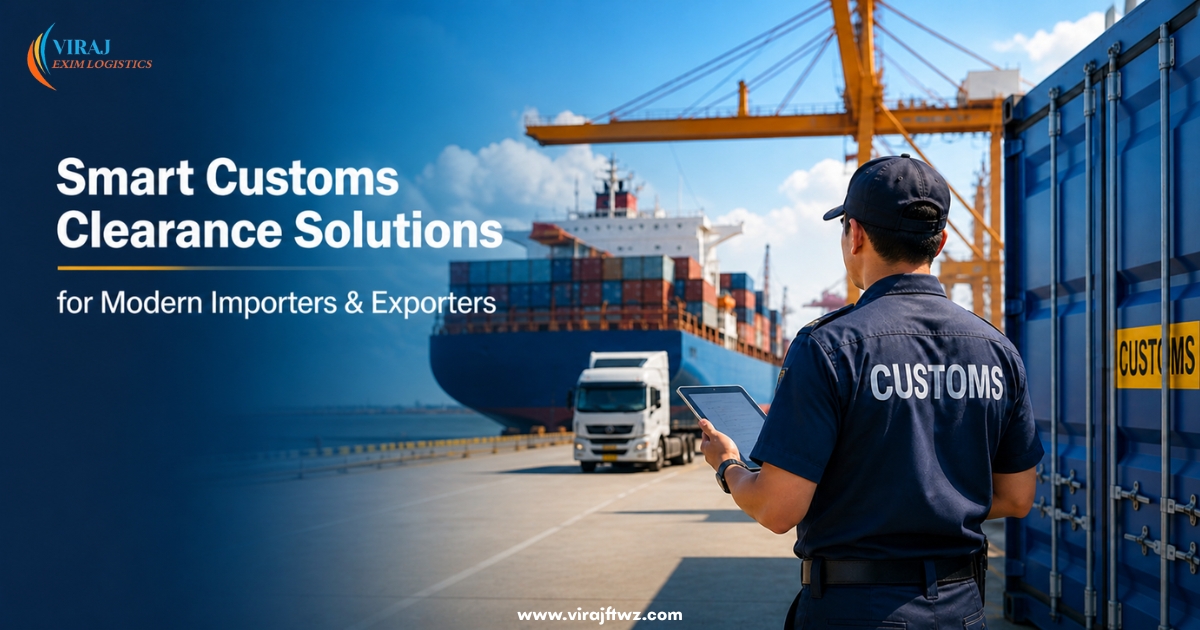
Global trade is growing rapidly, and businesses today depend heavily on smooth international logistics. However, one of the most critical steps in this process is customs clearance. Without proper clearance, shipments can face delays, penalties, or even border rejections.
Professional customs clearance services ensure that goods move smoothly across international borders with full compliance, accuracy, and speed. For importers and exporters, this is essential to maintain supply chain efficiency and reduce operational risks.
Customs clearance is the process of clearing goods through customs for import or export. It involves documentation and regulatory requirements that must be followed to ensure compliance with local and international laws. The customs clearance process involves verifying the contents of the shipment, determining applicable taxes, duties, and tariffs, and issuing the necessary permits and licenses. Customs clearance is essential for the smooth movement of goods across borders. Failure to comply with requirements can result in delays, penalties, or even the seizure of goods.
Customs clearance services in India play a vital role in ensuring that goods move smoothly across international borders. For businesses involved in global trade, an efficient import export customs clearance process is essential for avoiding delays, reducing costs, and maintaining compliance.
Customs clearance services in India ensure that goods move legally across borders by following proper classification, valuation, and declaration rules.
A well-managed customs clearance process in India prevents shipments from being held, rejected, or confiscated, allowing smooth business operations.
Errors in documentation or non-compliance can lead to heavy penalties. Incorrect import export customs clearance procedures often result in unexpected fines.
Using fast customs clearance services ensures accurate filing and duty calculation, reducing risks and avoiding extra costs.
Global trade requires strict compliance with Indian and international laws. Customs broker services in India help businesses comply with import and export regulations and tax policies.
A proper customs clearance process in India ensures legal compliance and builds trust with global partners.
Delays in customs clearance can slow down shipments and affect supply chains. Incorrect documents increase processing time.
Smart customs clearance solutions and efficient import clearance services help speed up approvals and ensure timely deliveries.
Delays can lead to storage costs, demurrage charges, and missed deadlines.
Professional customs clearance solutions simplify documentation and coordination efficiently, ensuring smooth and uninterrupted shipment movement.
An efficient import export customs clearance process ensures smooth global trade by improving compliance, reducing risks, and speeding up deliveries.
Reliable customs clearance services in India simplify logistics, control costs, and support long-term business growth.
Common customs clearance problems typically stem from paperwork errors, regulatory gaps, or miscommunication, resulting in shipment delays and added costs.
Inaccurate or Incomplete Documentation: Missing signatures, commercial invoices, packing lists, or incorrect company details (40-50% of delays).
HS Code Misclassification: Using the wrong Harmonized System code, leading to incorrect duties and inspection triggers.
Undervaluation/Overvaluation: The declared shipment value does not match the commercial invoice, leading to audits.
Missing Permits/Licenses: Failing to provide required certificates of origin, import licenses, or sanitary certificates for restricted goods.
Regulatory Non-Compliance: Not adhering to local import restrictions, bans, or changing trade regulations.
Inconsistent Descriptions: Vague descriptions or differences in weight/quantity across documents (e.g., invoice vs. packing list).
Unpaid Duties/Taxes: Delays in paying assessed fees or failing to pay previous penalties, which can freeze new shipments.
Physical Inspections (“Red Channel”): Goods flagged for inspection, causing multi-day delays, especially if past compliance is poor.
Incorrect Incoterms: Missing or wrong Incoterms on invoices, confusing who is responsible for customs costs.
Labeling Issues: Packages without required marks, labels, or country-of-origin identification.
Customs clearance in India requires mandatory documentation to assess duties and ensure compliance. Primary documents include the Bill of Entry, Commercial Invoice, Packing List, Bill of Lading/Air Waybill, and Import Export Code (IEC). Additional documents like Certificates of Origin, insurance certificates, and product-specific NOCs are needed based on the nature of the goods.
The customs clearance process involves several important steps that ensure the smooth and legal movement of goods across borders. When handled properly, each stage helps reduce delays, avoid errors, and improve overall efficiency.
All required documents are gathered and verified for accuracy. This step ensures there are no missing or incorrect details before submission.
Necessary forms like the Bill of Entry or Shipping Bill are submitted to customs. Proper filing helps initiate the clearance process without delays.
Authorities review documents and determine applicable duties and taxes. Accurate assessment ensures correct duty calculation and compliance.
All required charges are paid as per regulations. Timely payment avoids penalties and speeds up the clearance process.
Goods may be inspected depending on the shipment type. This ensures that the shipment matches declared details and meets regulations.
Once approved, goods are cleared and ready for delivery. This final step allows smooth movement of goods to their destination.
With proper expert support, each step is handled efficiently, reducing delays and ensuring a hassle-free customs clearance process.
Modern logistics companies like Viraj Exim Logistics provide smart solutions that simplify customs clearance.
These include:
End-to-end handling of documentation
Real-time tracking and updates
Faster processing at ports like Nhava Sheva
Expert handling of compliance and regulations
Reduced risk of errors and delays
By using smart customs clearance solutions, businesses can focus more on growth rather than operational hassles.
Professional customs clearance services improve international shipping by ensuring accurate documentation, compliance with evolving regulations, and proper classification of goods, helping prevent costly delays and fines. They also support optimized duty payments and provide expert handling of complex procedures, allowing businesses to focus on growth while reducing overall logistical risks.
Key benefits of using professional customs clearance services include:
These services ultimately offer a smoother trade experience, reducing the operational stress and financial risk associated with cross-border trade.
Customs clearance is a vital process in international trade that ensures smooth import and export operations while maintaining regulatory compliance across borders.
Import customs clearance focuses on the regulation of goods entering a country, where duties and taxes are assessed, and strict compliance checks are carried out to ensure that all imported items meet legal and safety requirements. This process requires the submission of a Bill of Entry, which is a key document used to declare the details of the imported goods to customs authorities for assessment and approval.
Export customs clearance, on the other hand, deals with goods leaving a country and is primarily focused on proper documentation and smooth shipment of cargo to international destinations. It requires a Shipping Bill, which serves as the main export document submitted to customs for verification and clearance. In many cases, exporters may also benefit from export incentives provided by the government to encourage international trade and boost competitiveness in global markets.
Effective customs clearance enhances supply chain efficiency, ensures legal compliance, and supports faster, more reliable global trade.
Selecting the right logistics partner is crucial for success. Here’s what to look for:
A reliable partner with strong expertise, efficient processes, and a customer-focused approach ensures smooth operations and long-term business growth across India.
Customs clearance is a vital part of international trade that directly impacts delivery speed, compliance, and business costs. With increasing global trade complexity, relying on professional customs clearance services is no longer optional; it is essential.
Smart logistics solutions help businesses reduce delays, ensure compliance, and streamline global operations. With the right support, importers and exporters can focus on growth while experts handle the complexities of customs processes.
It is the process of getting government approval to import or export goods.
It usually takes 1–3 days, depending on documentation and inspection.
Yes, but it is complex. Hiring professionals is recommended.
Delays can lead to extra charges, penalties, and shipment hold-ups.
They offer expert handling, fast processing, and end-to-end logistics support.
A-213 , Kasturi plaza , Manpada Road , Ramnagar , Dombivli (E) pin 421201 , Dist. Thane, Maharashtra, India
Copyright © 2024 Viraj Exim Logistics. Develop by Technofet